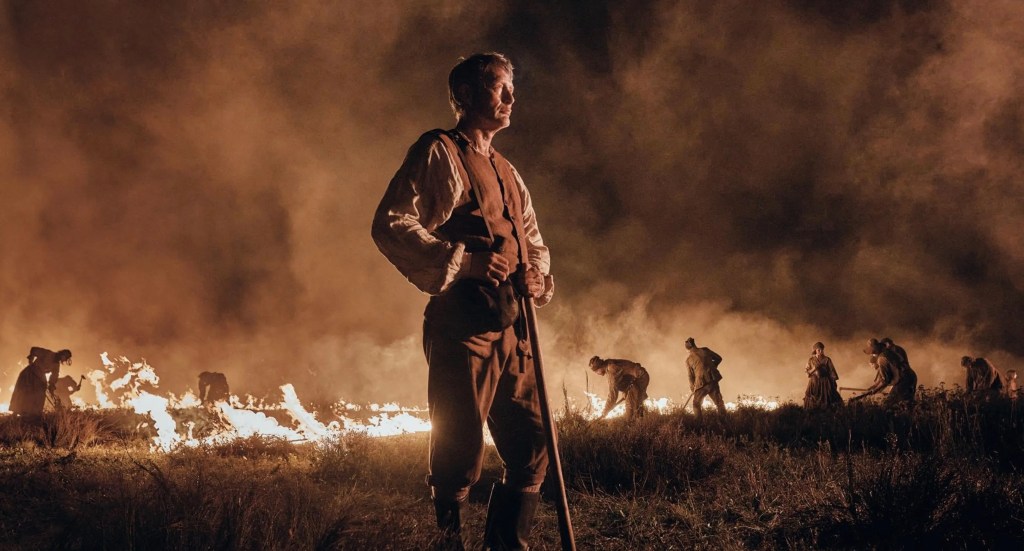
In an untamed, barren land of Denmark, lies an area called the Jutland. Defined as a moorland, cultivation of crops is near impossible and it’s low acidic soil thrives in hard and dry weather conditions. Captain Ludvig Khalen (Mads Mikkelsen) is an impoverished, retired military officer who gets permission from the king to try and cultivate this impenetrable wilderness. His goal is to turn this land into a farmable countryside so he can earn a noble title with a huge manor.
The biggest obstacle Khalen soon discovers isn’t the uninhabitable land, but local magistrate Frederich Schinkel–a ruthless, sadistic landlord who believes all of the Jutland belongs to him. And Schinkel, who insists you refer to him as De Schinkel, is a complete dick. If you want someone who is wealth personified, who has never needed to work for anything in his life, then this near cartoonish character really fits the bill. I don’t think I’ve come across a character so unsufferable and so easy to hate in recent memory.
Khalen is no saint either. We are soon treated to two incredibly flawed human beings, whose stubbornness and incredible lack of humanity, soon threaten to destroy everything around them.
One aspect of The Promised Land that I really loved was the metaphor for the land itself. For all the qualities the land possesses–stubbornness, isolation, hardiness, to name a few, are all qualities that apply to Khalen. He’s an incredibly selfish person who lacks humanistic qualities. A lonesome bachelor, his militaristic background has him solely focused on the task at hand. The concept of no does not exist. If a sick child needs to eat, the answer is no. When he takes in a runaway servant and his wife, it is easy to mistake it for warm hospitality, but these servants have value. They can work the land–for no money, of course. So what is his trick to grow this land? Potatoes, a crop that can grow in almost any condition.
His growth as an individual throughout the film is personified by the potato. Schinke–excuse me, De Schinkel’s antics of destruction and death do slowly humanize Khalen. Instead of viewing the people around him as pawns, he gradually becomes to view them as people, who are just as mistreated by others as he is by De Schinkel. As the farmland begins to grow, so does his warmth, personality, and humanity. The film does a great job balancing the act of making the viewer question if he’s really warming as a person or defending the land that so important to him, even if that means standing up for people. The stakes don’t always force him to make the right decision, which is what makes him such an effective anti-hero.
The ending of the film for me is a total knockout. Without spoiling it, all I can say is don’t expect a grand duel between these two bull-headed individuals. The film has much more nuance and cleverness than a predictable ending, though for some viewers I fear they’ll wish they had that instead. Even if that means undercutting what the film is trying to say. But that’s a larger discussion for a different day.
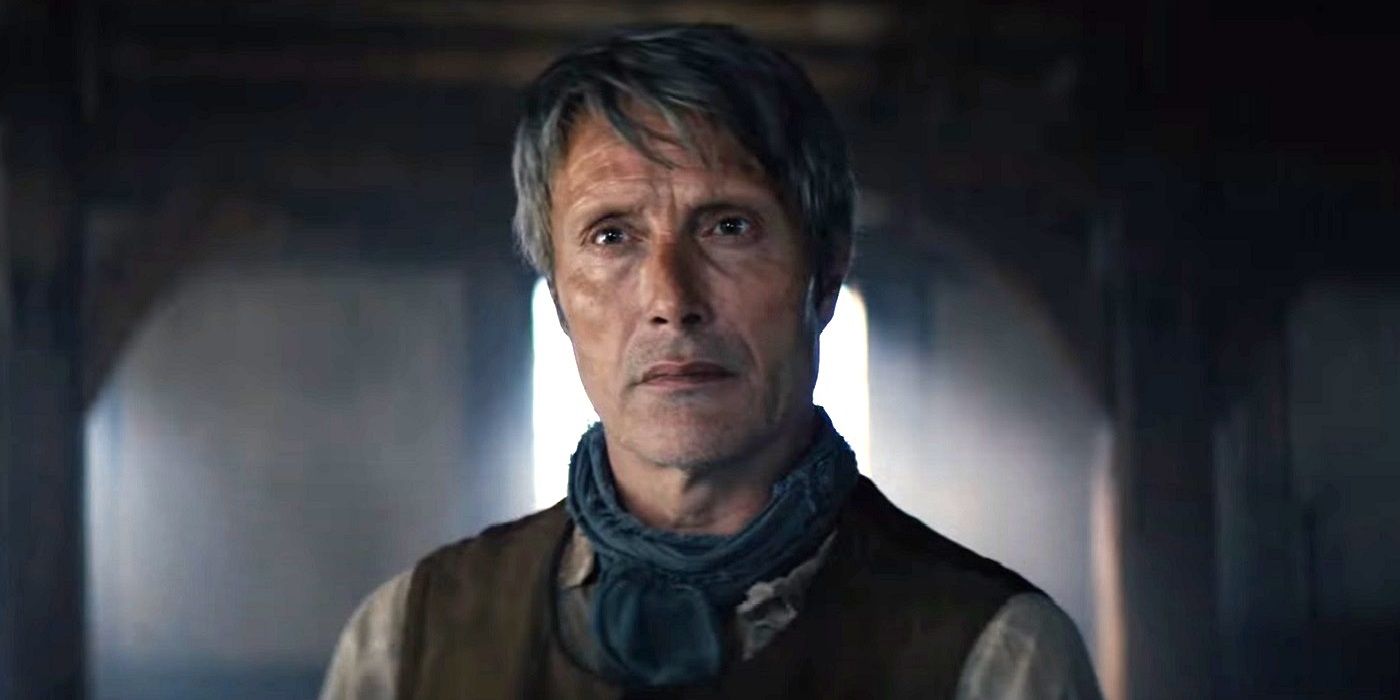
It’s also worth noting that Mads Mikkelson is becoming one of the greatest actors of our generation. For a man who could be easily typecast based on his look alone, he’s displayed a wide variety of range in his roles from wrongfully accused man in The Hunt, serial killer Hannibal Lecter in the NBC show Hannibal, guarding father in Rogue One, and thwart to James Bond in Casino Royale. I’ve consistently preferred his international roles, but at this point you could sell me any movie on his name alone. The Promised Land is another landmark performance from him and among one of his best.
The cinematography in The Promised Land also deserves much praise. The Jutland from description alone, a moorish swamp land, shouldn’t make for such stunning images. Cinematographer Rasmus Videbæk uses his wide lens to capture the vastness of land and the smallness of the farm that resides in it. Khalen’s farm may exist, but it’s still a small speck and illustrates the isolation. Overhead shots put you into the weather elements, as they beat down on Khalen and his workers.
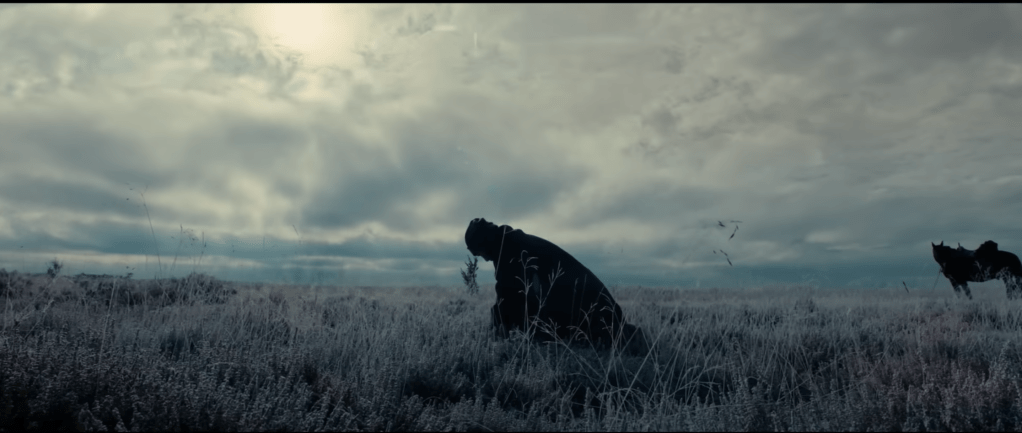
The Promised Land is a metaphorical insight into the lives of two men set on a crash course of destruction. At times, it’s a slow burn, but you can’t help but feel like a frog in slowly boiling water as the tension begins to mount. Gorgeous cinematography, superb performances, and a poignant ending all contribute to The Promised Land being a strong contender to end up in my Top Ten by years end.
★★★★½




 hunter albert
Leave a comment