
I did not think the trailer for Civil War looked very good. Alex Garland has written (28 Days Later, Sunshine) and directed (Ex Machina, Annihilation) some of my favorite movies. But Civil War looked like a cheap ploy at grasping at some of our worst fears in the United States: another civil war. I was convinced that the conversation around this movie, in an election year no less, was going to be borderline miserable.
Yet Alex Garland’s Civil War isn’t explicitly about the politics of America. It’s not even about the racial and social divide that dominates our own conversations. It’s about a group of four war journalists as they make their way into the frontlines of the civil war. What is covered in Civil War is the thoughtless slaughter and destruction that comes with a conflict. At a psychological level, the film looks at our own humanity.
Young photographer Jessie finds herself at the heart of a protest in New York City. At first she keeps her distance, but suddenly finds herself up close and taking pictures. When a police baton strikes her in the head, it’s the first of many reality checks. She comes to her senses and sees her idol standing above her, renown war photographer Lee Smith (Kristen Dunst). It’s Lee’s experiences and senses that when a woman waving an American flag comes running towards the crowd, she shields Jessie behind a care as the suicide vest detonates.
It’s Jessie’s and Lee’s relationship that is the focus of the deeper theme of humanity in the movie. Lee has become numb and war torn from her experiences. Jessie is full of adventure and innocent of the brutality that comes with conflict. It’s this journey that transcends over the course of the movie that really clicked for me. A story and theme that show the circle of life for a war photographer and how an older mentor comes to grips with the idea that she can’t protect this younger person, no matter how much it reminds her of her own youth.
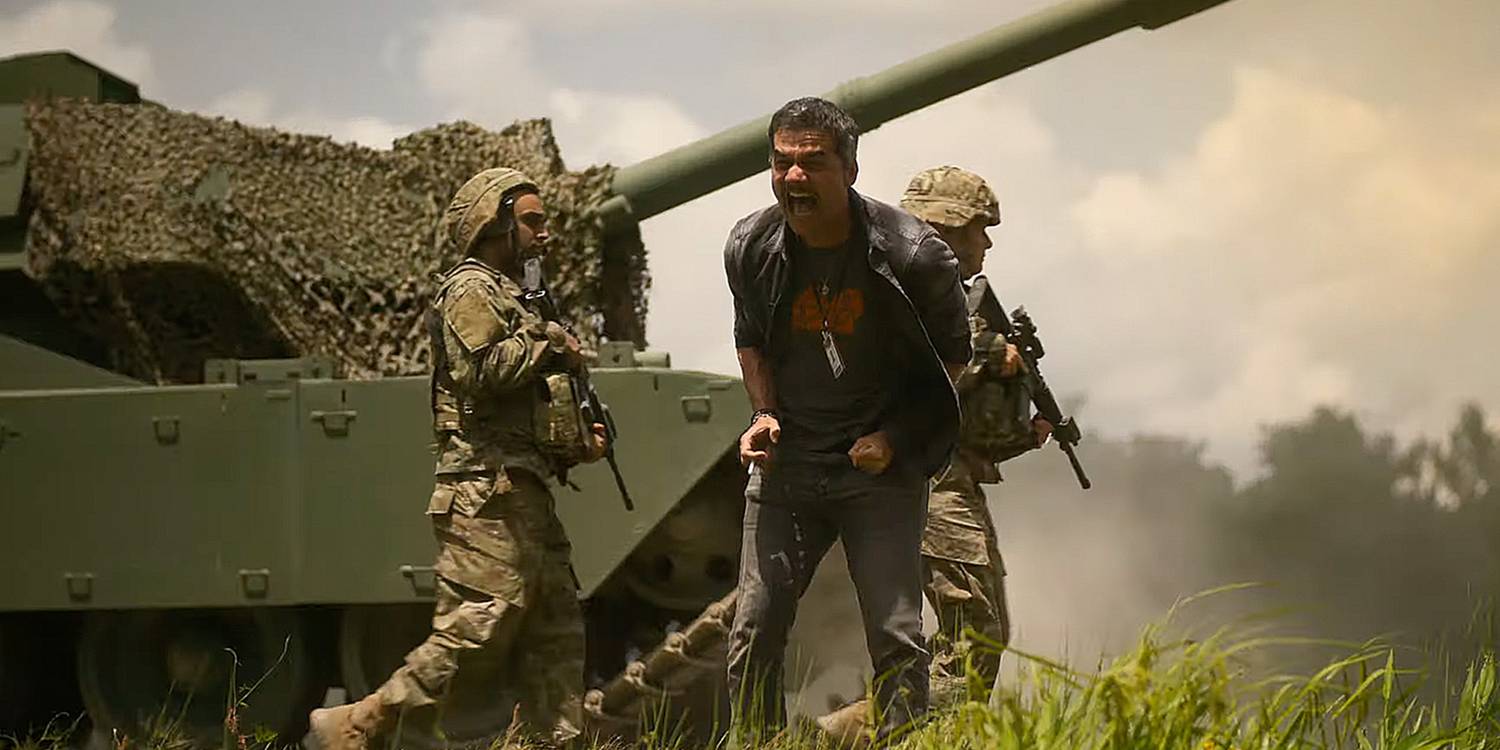
The trip down south to the frontlines is like walking through the nine circles of hell in Dante’s Inferno of conflict and violence. First we see the aftermath of violence. Then we see it from a distance. Then we’re in a gunfight. And just when you think there is some brief respite, the journalists find themselves pinned down by a sniper–only to follow it up with a face to face confrontation of a man who is political extremism personified. All of it pales to the final assault on Washington D.C.
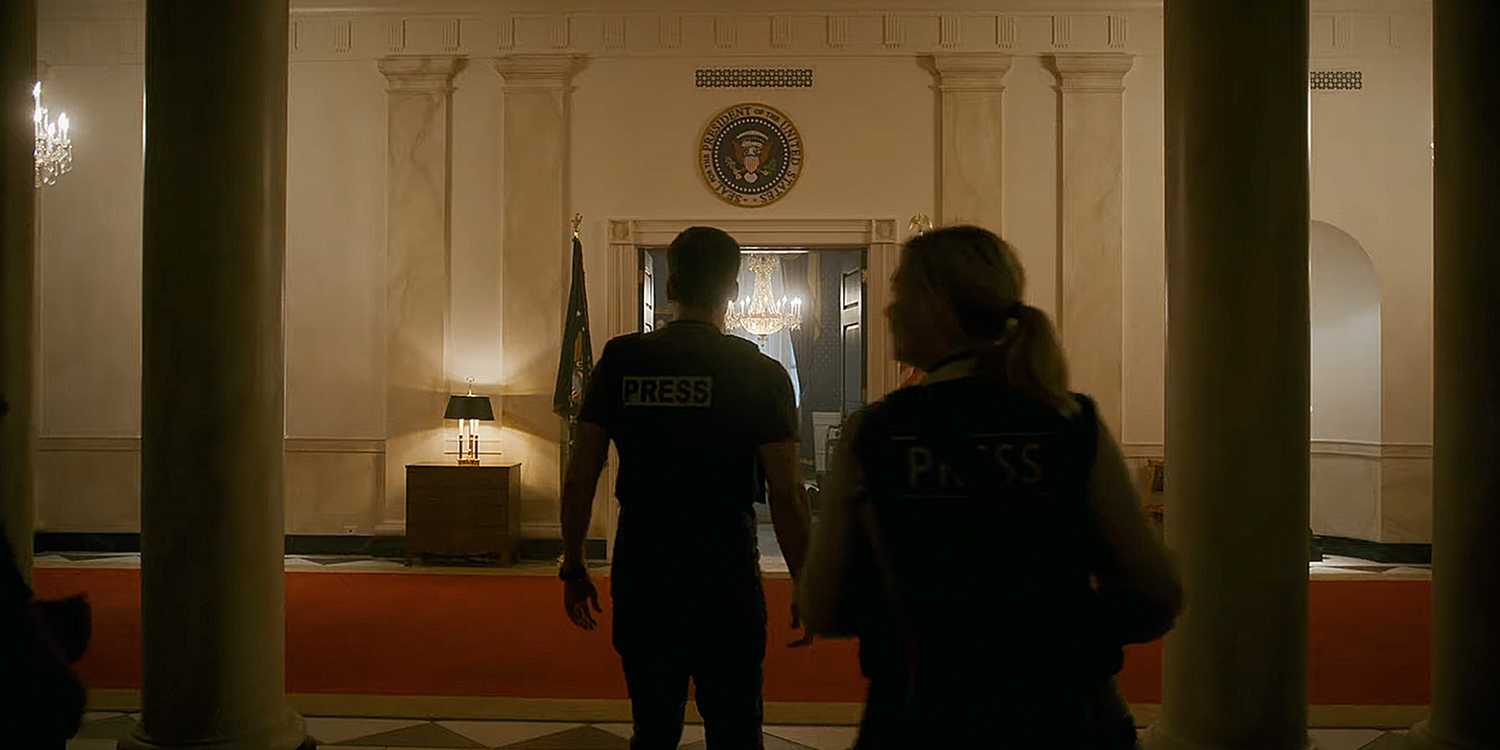
The final act deserves a lot of praise for its action. Not since the 1995 Michael Mann movie Heat have gunshots carried such a hefty weight to them. I think too often movies rely on the visual impact of a bullet. Bullets, bullets, and more bullets–who doesn’t love a gun fight to showcase mayhem? Action movies love showing the gold metal casings ejecting from the gun barrel and hitting the ground. But it’s overdone to the point where it’s lost its shock factor, I’m no longer getting the dopamine hit. There was something different about the pop of the weapons in this movie that made it sound more real and terrifying. Firefights involve suppressing fire, flanking, and precision aim that comes with modern warfare. You get the sense that while the killing in the streets seems chaotic, the bullets find their targets with precision. We’re not treated to the aim of stormtroopers from Star Wars. People aren’t miraculously avoiding gunfire unscathed.
But I cannot talk about this movie without at least talking about the elephant in the room. And that is its politics. Or sometimes lack thereof.

For political context, the United States has seemingly split itself into four different factions: the Loyalist States, the Florida Alliance, the New People’s Army, and the Western Forces. Of the four alliances, the movie only really cares about two of them: the Loyalist States and the Western Forces.
The Western Forces consist of the two stalwart states of Texas and California. Garland’s picking of these two states is absolutely intentional. Rightfully so, painting one side of America as the aggressor and one as the defender would cause a political firestorm and vacuum that would strip any sort of level headed discussion away from the movie. And I think it worked. How many politicians or political news pundits have been angry over this movie? In a society that has examines the statements of LeBron James and J.K. Rowling, the conversation around Civil War has been tame–if not straight up non-existent. There are seeds planted that do depict some political and social dynamics in a shrewd way. It essentially lets the viewer interpret these pieces of information for themselves. There’s mention of an ANTIFA massacre, but it’s worded in a way that doesn’t reveal who committed the massacre itself. Garland respects the viewer enough to connect the dots on their own.
If Garland is essentially raising his hands and proclaiming himself not to take any sides, you then have to dig deeper and ask the question: what are you stating with this film then?
I have a few qualms with the ending, but I won’t spoil it here. I just think the movie really whiffed on one opportunity. I’ll be honest in that when I left the theater, I didn’t think I had seen a great movie. As time has gone on, I’ve thought about Civil War more and more. Is it on level of Annihilation or Ex Machina? I don’t think so. I do think it’s better than his previous film Men.
The best films for me are the ones that stick with you long after you’ve left the theater. Some are purely surface level experiences that are enjoyable, but lord knows if you’ll remember anything about them a year from now. I will remember Civil War a year from now.
★★★★
The movie will be the first 2024 release I want to write a deep dive on. While I mentioned the movie doesn’t list out things for you explicitly in a political or social way, I do think there is plenty of implicit commentary. But I would feel a little irresponsible writing on it deeply after just one viewing. I’ll put out this post at some point after the movie is available for streaming.




 hunter albert
Leave a comment