
Based on the non-fiction novel of the same name, Tokyo Vice’s first outing was a wonderful introduction in the criminal underworld of the yakuza through the eyes of American reporter Jake Adelstein (Ansel Elgort). Jake is the first foreigner to work for the Japanese newspaper Meicho Shimbum and starts on the bottom. When he discovers that two men have ended up dead due to their debts to the yakuza, he develops a fascination with their organization. His reporting soon unveils a fragile state of peace between rival gangs and as his investigation into the yakuza deepens, the stakes dramatically rise. Tokyo Vice is sublime in its style and a refreshing breath of air compared to the tried and true police procedurals set in the United States.
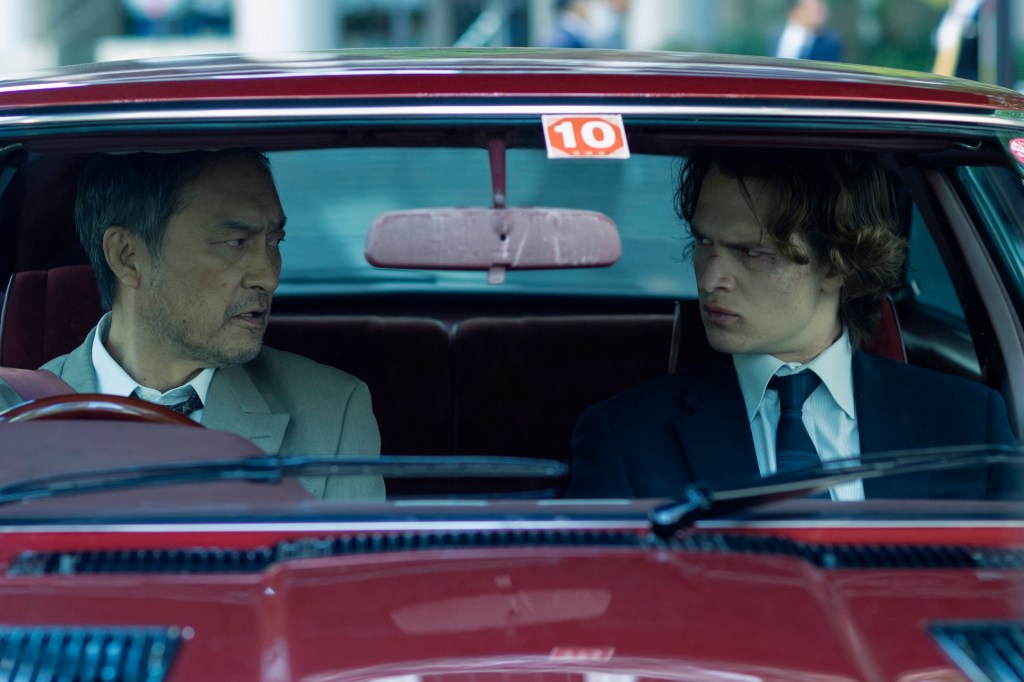
While I really enjoyed the first season of Tokyo Vice, I think it’s second outing outclasses it in nearly every way. When TV shows increase an episode count from one season to another, it doesn’t always fill that time wisely (see Ted Lasso). The increase to ten episodes for the second season pays off in many ways. It does a much better job fleshing out the characters from season one. Jake’s co-workers Emi, Jun “Trendy”, and Makoto “Tin Tin”, who are more background characters in the first season, all get expanded storylines and character depth. Instead of being simply co-workers, we get insight into all of their personal lives. Emi struggles to develop personal relationships due to her mentally ill brother she lives with. Trendy deals with struggles at his job and wants to desperately prove himself. And Tin Tin begins a relationship with a male United States government official, showing the hidden lives of the LGBTQ+ community in Japan. We also are introduced to the importance of Kazuko, the wife of Tozawa, who actually holds a lot of power. These are just a few instances, but increasing the importance and relationships of nearly every character in the second season strengthens the plot points. And this isn’t to say that the main characters are forgotten either–Jake, Sato, Hiroto, and Samantha are all just as important, if not more, than their season one outings.
Season two heavily leans into the fast changing climate for the yakuza. Tozawa sees a greater good in taking the yakuza from the underground to upper echelons of government and finance. Tozawa’s thinks that if the police are going to eventually come after all of the gangs, then where can he go so the police can’t touch him? His answer lies in the Japanese government–an entity too large and powerful for normal police to prosecute. Japanese society highly respects loyalty and honor but Tozawa’s actions go directly against any sort of honor and loyalty the yakuza heavily rely on.

I want to be clear: I’m not saying Tokyo Vice is on the level of The Wire. But I’ll be damned if the second season didn’t remind of the narrative structure of the renowned HBO series. Overlapping storylines and character arcs from the newspaper, police force, and yakuza all work in tandem to portray a fascinating look into the life of late 90’s Japan. Much like McNulty from The Wire, Jake is a man with strong convictions on what’s wrong or right, even when he himself doesn’t adhere to his own rules. Corruption compromises the police force, the newspaper, and the government from carrying out what they’re supposed to do. Characters in all these organizations have been lured into a false sense of purpose about the roles their respective organizations play. The newspaper is supposed to serve the people of Japan into the happenings of government and crime. The police force is meant to represent law and order, while the yakuza offers purpose to young individuals with limited prospects. Yet the newspaper is compromised by the subjects they cover, the police are handicapped by the corruption of the criminal organizations they’re supposed to contain, and the young foot soldiers of the yakuza are pawns for their bosses personal gain.
I can’t write about Tokyo Vice without covering another topic. It’s an old Hollywood crutch (and to an extent Western media as a whole): the perspective of a white person in a foreign land. At it’s core, it’s simply a way to cater to a Western audience. If a viewer sees someone like themselves in a television show or movie, especially if it takes place in a place other than the United States, the more likely they’re going to watch it. Regardless of whether it’s based on a true story or not, audiences like to watch a show or movie where they can relate with a character. Consciously or not, race does play a factor and I am not arguing that it is bad or morally wrong in certain instances. Where Hollywood tends to royally screw up is how that perspective is portrayed. White saviorism is portrayal of white people saving people of other races from their own ways. These other nationalities can be portrayed as backwards, lacking intelligence, morally unjust, or blasphemous in their own lives.

Thankfully Tokyo Vice doesn’t play into any of these narrative shortcomings.
The series doesn’t portray Jake as an authoritative figure who has come to show his Japanese colleagues on how to be a good reporter. Jake is an immature individual. He frequently makes very poor decisions in both seasons of the show. He decision to establish a relationship with the escort of Tozawa is among a reel of highlights in poor decision making. Jake’s antics also threaten his fellow colleagues and their wellbeing, all in the pursuit of covering the yakuza. Jake’s ambitions for himself is nearly akin to mythological figure Icarus.
One narrative stumble is the storyline involving Jake’s family. It never really pays off in any meaningful way. When season one heavily leaned on Jake’s relationship with her sister, it felt as if it was planting seeds for a narrative arc. After a brief trip back home, it’s apparent that none of it really mattered. Which is a shame because I felt like there was a lot to work with. Tokyo Vice has the possibility to continue beyond season two and if it does, it’s possible this narrative slip-up could be redeemed.

The second season of Tokyo Vice improves upon its characters and storylines. The main characters are all playing equally important roles from the first season, while supporting characters are fleshed out, and new characters are introduced that are among the shows most memorable. Overarching storylines continue into the second season and the show does a great job overlapping the yakuza, the newspaper, and the police force. I hope that the series ends here, as the book covers the major plot points. Anything beyond this would purely be the show-runner’s creation. Rarely do shows end it when they should and I’m afraid that future seasons would not match the quality. That being said, Tokyo Vice is probably one of my favorite television shows in the past fifteen years.
★★★★½




 hunter albert
Leave a reply to ralbert45813acfea Cancel reply