I won’t lie, for a large portion of the year I believed that we were experiencing a mediocre year for movies. There were plenty of movies that I was a fan of, but I wasn’t immediately texting anyone I knew that they needed to go see “X” movie. Thanks to the slow release of movies around awards season, I spent the past month catching up on a lot of releases I didn’t get to see in time. So in a very ironic way, some of the best 2024 releases I saw in 2025.
But hey, rules are meant to be bent. The rules are straightforward: these were the best films I saw that came out in 2024. “But Hunter! Some of the movies on your list technically came out in 2023!” Eat dirt.
Ok, to be more kind: Yes, some of these films technically debuted in 2023. But if they didn’t get a proper U.S. release until 2024—whether due to distribution delays or festival rollouts—then they count for me. Simple as that.
For a film junkie like myself, I have to clarify that I did not get to see every big movie from last year. I do have a life, like creating this website to write long posts such as this. But if you’re expecting to see A Complete Unknown, I’m Still Here, The Garfield Movie, or Thelma, for example, I’m sorry to disappoint.
If you’re curious to know what just missed the cut, here are the notable mentions:
- Alien: Romulus
- Conclave
- Kingdom of the Planet of the Apes
- The Animal Kingdom
- Rebel Ridge
Without further ado:
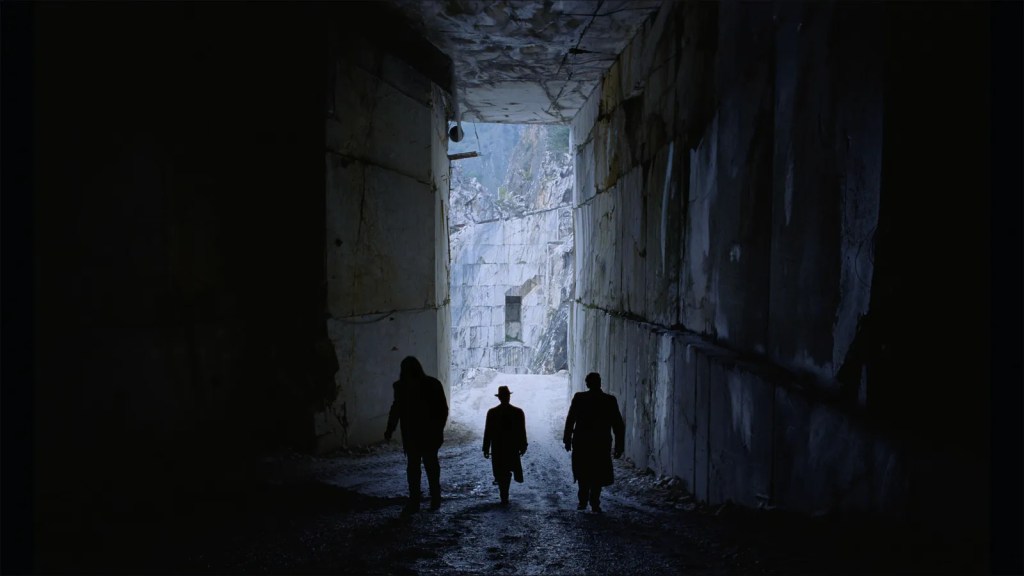
25. The Order

Based on a true story. A string of violent robberies in the Pacific Northwest leads a veteran FBI agent into a domestic terrorist plot to overthrow the federal government.
Based on true events, The Order explores the rise of right-wing extremism in the early 1980s under Bob Mathews. While many are familiar with the Oklahoma City Bombing, the Waco Siege, or Ruby Ridge, fewer know about Mathews and the influence of The Turner Diaries on right-wing terrorism. Nicholas Hoult delivers a stellar performance as Mathews, capping off an exceptional year (also starring in Juror #2 and Nosferatu). A superb soundtrack and striking cinematography create a tense atmosphere, even if the plot’s pacing is occasionally uneven.
24. Evil Does Not Exist
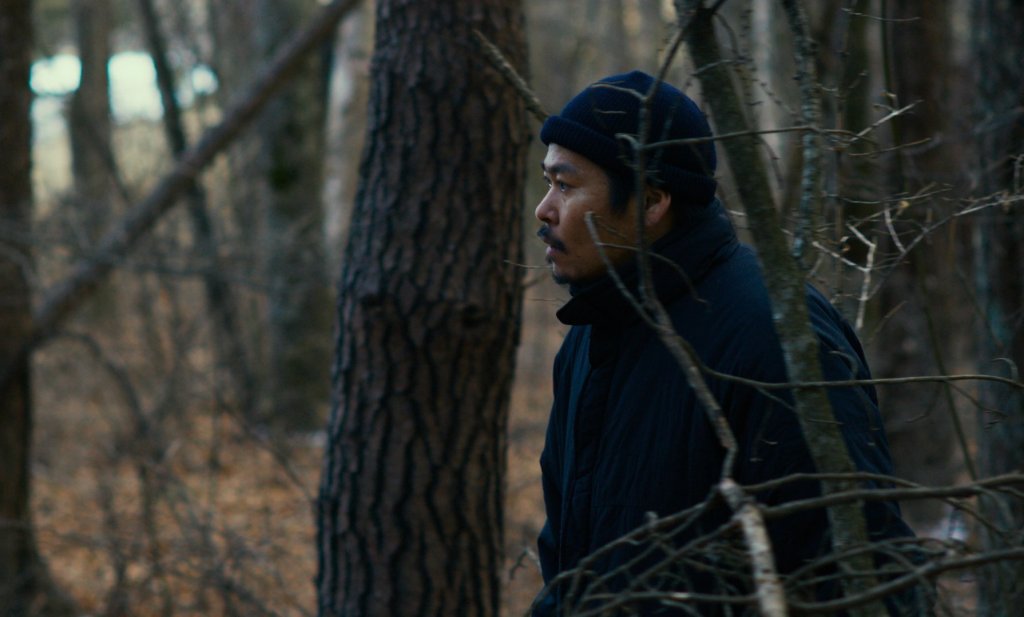
Takumi and his daughter Hana live in Mizubiki Village, close to Tokyo. One day, the village inhabitants become aware of a plan to build a camping site near Takumi’s house offering city residents a comfortable “escape” to nature.
The divide between rural and urban Japan has long been a theme in Japanese cinema, and while Ryusuke Hamaguchi’s Evil Does Not Exist doesn’t necessarily break new ground, it remains an important film. Unflinching in its critique of capitalism and the pursuit of profit at the expense of Japan’s tranquil landscapes, the film is a slow burn that quietly builds tension.
23. Kinds of Kindness
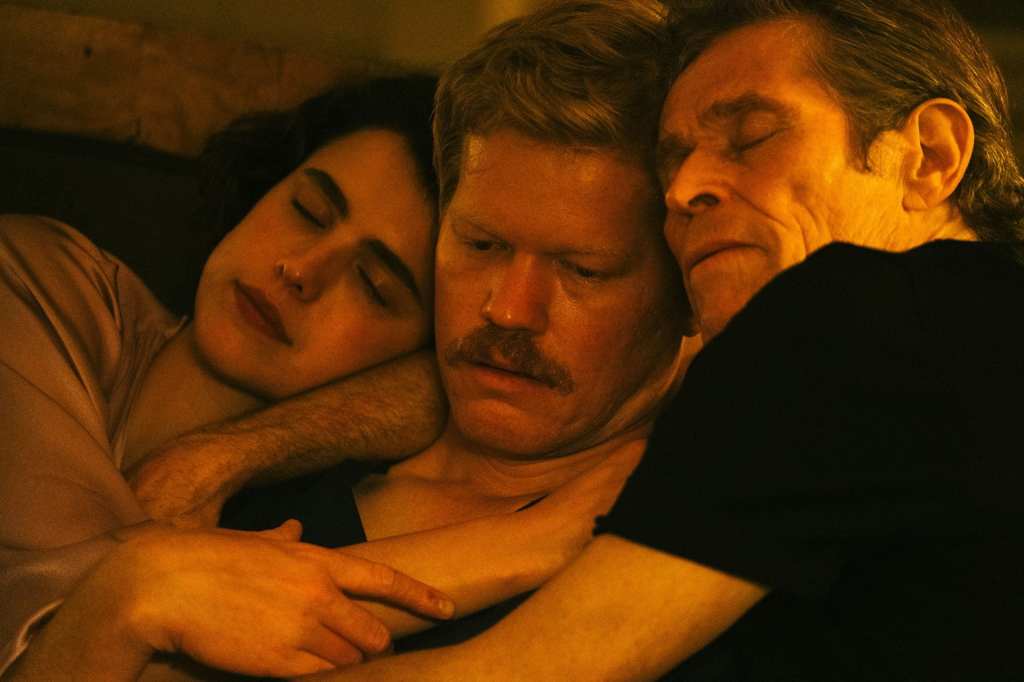
A triptych fable following a man without choice who tries to take control of his own life; a policeman who is alarmed that his wife who was missing-at-sea has returned and seems a different person; and a woman determined to find a specific someone with a special ability, who is destined to become a prodigious spiritual leader.
Last year, I found myself in the minority with my enthusiastic praise for Poor Things (at least amongst people I know). Regardless of how you felt about that film, Kinds of Kindness is a different beast. Yorgos Lanthimos isn’t afraid to take risks, crafting three distinct narratives with the same core cast. The result is hilarious, bizarre, bold, and captivating. One of its greatest strengths is how differently each viewer responds to its stories—everyone I’ve talked to has a favorite for their own reasons. While I wouldn’t rank it among Lanthimos’ best, Kinds of Kindness is certainly more accessible.
22. The Bikeriders
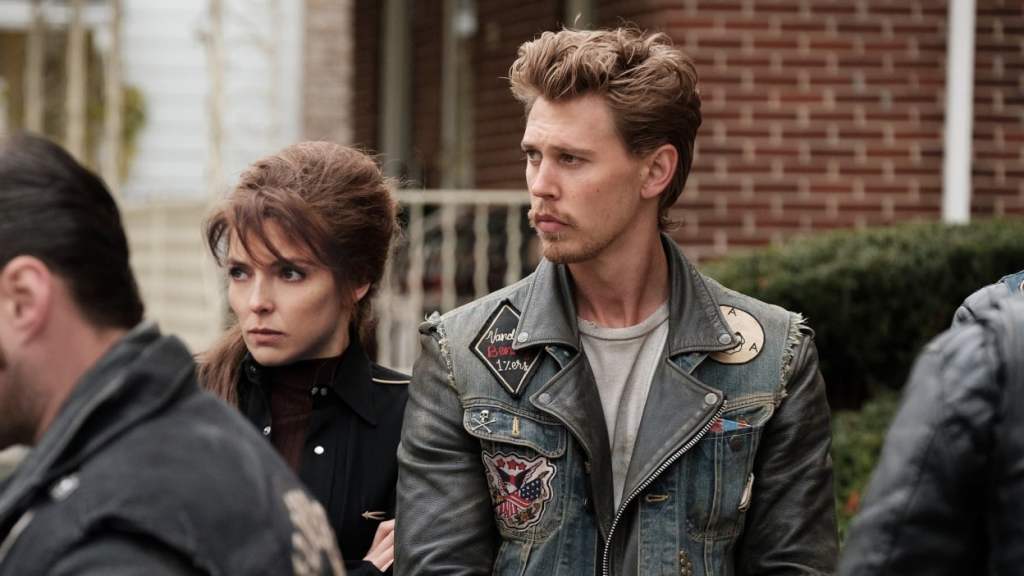
Over the course of a decade, a Midwestern motorcycle club evolves from a gathering place for local outsiders to a sinister gang, threatening the original group’s way of life.
The Bikeriders is an ode to a bygone era of American history—one that its own characters slowly realize is slipping away. When a group like the Vandals Motorcycle Club projects an image of lawlessness and toughness, it’s only a matter of time before more extreme figures take it too far. Much like No Country for Old Men, the film explores a generational shift, where the older members watch a new, more volatile youth take over and wonder if they ever truly belonged. Even though this era predates me, I still felt a sense of nostalgia. There’s a universal truth here: the things we love evolve, for better or worse, and that initial sense of wonder is always hard to recapture.
Also, I don’t recall Austin Butler sounding like Elvis in this one. That’s gotta count for something, right?
21. The Apprentice

A young Donald Trump, eager to make his name as the hungry second son of a wealthy family in 1970s New York, comes under the spell of cutthroat lawyer Roy Cohn. Cohn sees in Trump the perfect protege: someone with raw ambition, a hunger for success, and a willingness to do whatever it takes to win.
I understand if a movie about Donald Trump isn’t going to get you to reach for your remote. Odds are that whenever you watch TV or browse your favorite social media app, it isn’t long before you encounter him in one way or another. So I won’t soapbox that you should ignore or watch this movie.
I can say that The Apprentice featured two of my favorite performances this year from Sebastian Stan (who plays Donald Trump) and Jeremy Strong (who plays Roy Cohn). This is a study of an incredibly intriguing relationship between the two men that would lay the basis for who Donald Trump is today. In a weird twisted way, this is a modern day telling of Frankenstein. (Side note: props must be given to Mary Shelley for not imbuing the monster with Donald Trump’s hair… if that was ever a possibility.)
20. Furiosa: A Mad Max Saga

Snatched from the Green Place of Many Mothers, young Furiosa gets caught in the crossfire of two tyrannical warlords; as the tyrants fight for dominance, Furiosa soon finds herself in a nonstop battle to make her way home.
I wasn’t a huge fan of the Mad Max reboot. My biggest issue? I just didn’t care about the characters. The action was undeniably great, but I walked away feeling indifferent. In an industry that churns out action movies every year, I could appreciate Mad Max for its distinct visual style, but it still felt trapped by familiar tropes. I can already hear the angry mob revving their engines, ready to run me over with a monster truck and impale me with a flaming guitar—but I stand by it.
Furiosa changed that for me. While it doesn’t match the relentless, high-octane action of its predecessor, it’s a more balanced film that made me care about its characters. Watching it finally made the lightbulb go off—I realized my issue wasn’t Mad Max himself, but my lack of connection to him. Furiosa’s origin story, on the other hand, had me invested. Anya Taylor-Joy is great, but for me, Chris Hemsworth’s aptly named Dementus stole the show.
So, I hope this means I can escape the meat grinder. I get it now, I swear!
19. Femme

Jules is targeted in a horrific homophobic attack, destroying his life and career. Some time after that, he encounters one of his attackers in a gay sauna and wants revenge.
A gripping psychological thriller that genuinely surprised me with its exploration of revenge, masculinity, and identity. It’s not an easy watch, but its unflinching approach to these themes feels especially relevant in a world where the LGBTQ+ community remains scrutinized and misunderstood. The film captures the isolation and loneliness of its two protagonists, much like All of Us Strangers did a year ago. The performances are outstanding, and the ending raises a compelling question: do the ends justify the means?
18. Didi

In 2008, during the last month of summer before high school begins, an impressionable 13-year-old Taiwanese American boy learns what his family can’t teach him: how to skate, how to flirt, and how to love his mum.
An unflinching look at the awkwardness of youth and the struggle to find yourself. I saw a lot of myself in Didi—someone not always confident at a young age. Some scenes are tough to watch. Didi isn’t the most likable protagonist—he’s mean at times, takes things for granted, and tries to impress people for all the wrong reasons—but he’s a kid. Growing up isn’t easy, and director Sean Wang does an excellent job of capturing the messy, unfiltered reality of it. We’re often sold a glamorous vision of coming of age, but in truth, there’s a little bit of Didi in all of us.
Also, special shoutout to Joan Chen for delivering one of the best performances of the year.
17. Civil War

In a dystopian future America, a team of military-embedded journalists races against time to reach Washington, D.C., before rebel factions descend upon the White House.
The award for most misleading trailer and marketing goes to Civil War. I get that A24 needs to sell tickets, but the way this film was marketed—especially in an election year—felt almost exploitative.
Despite covering the theoretical idea of a civil war in the United States, something many Americans fear is inevitable, Civil War isn’t about the political insecurities at the surface level. It’s politically uncommitted, letting you connect the dots yourself—whether you agree with that perspective or not.
What Civil War really is, though, is a gripping exploration of a group of photographers slowly making their way into the heart of the conflict. It’s a story about detachment and numbness in the face of violence, diving deep into the desensitization of America’s response to the violence that surrounds us.
16. Mars Express
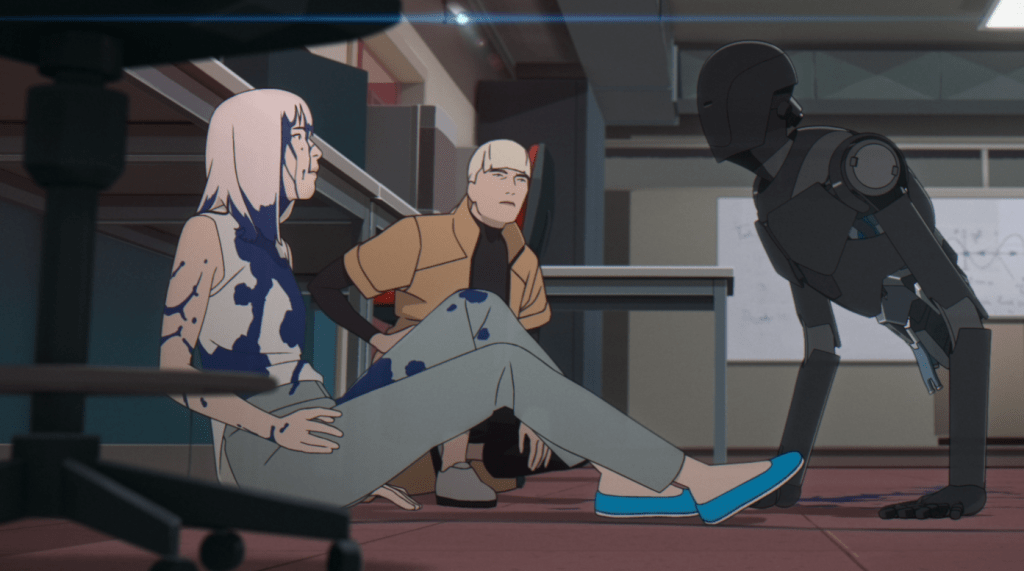
Aline Ruby and her partner are hired by a businessman to track down a hacker; On Mars, they explore the planet’s capital city where they find a missing girl who holds a secret about the robots that threaten to change the face of the universe.
Hollywood is flooded with 3D animated films. I’m not knocking that—when Pixar movies routinely gross over a billion dollars, it’s no surprise that studio execs eagerly crunch the numbers to see how much richer they’ll get.
What we’re missing, however, are bold, traditional 2D animated films. Mars Express won’t be making a billion dollars—I’m not even sure it broke even—but I’d take a film like this over a modern Pixar movie nine times out of ten.
Despite being French-language, Mars Express wears its anime influences on its sleeve. A techno-noir blending the animation style of Akira, Perfect Blue, and Miyazaki with a Blade Runner-esque story, it delivers a sublime detective tale that left me wanting more films like this. It may be wishful thinking, but between Mars Express and the animated series Scavengers Reign, I’m feeling a bit more hopeful for the future of 2D animation.
15. Wicked
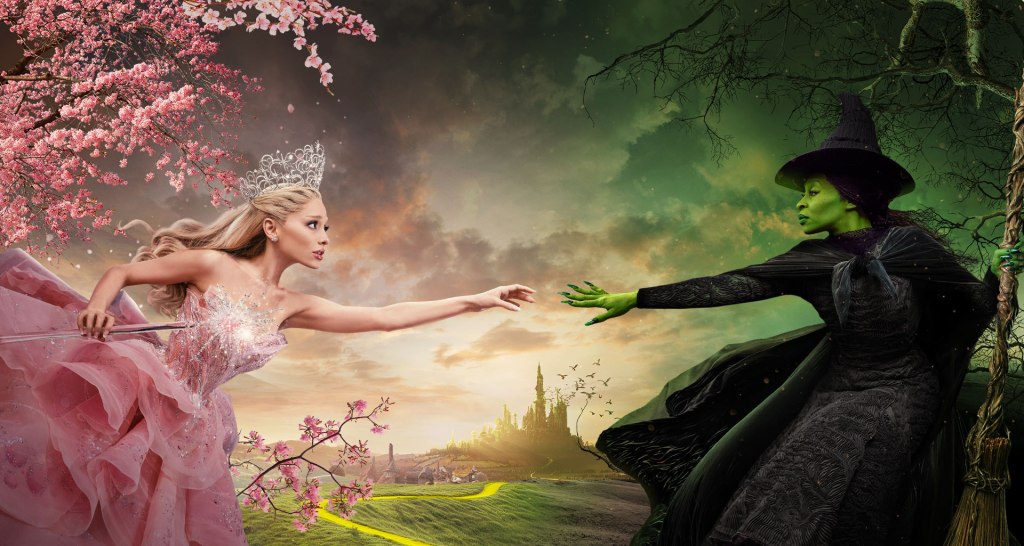
Misunderstood because of her green skin, a young woman named Elphaba forges an unlikely but profound friendship with Glinda, a student with an unflinching desire for popularity. Following an encounter with the Wizard of Oz, their relationship soon reaches a crossroad as their lives begin to take very different paths.
I’m someone who really dislikes musicals. The choreographed dancing, the singing, the relentlessly upbeat energy—it all sends a shiver up my spine. Studies show that babies have an innate fear of spiders. I’m convinced that if they had tested me as an infant by wheeling out Singin’ in the Rain on a tiny screen, I would’ve had the same reaction. And if that spider could sing and dance? I probably would’ve spontaneously combusted.
So, I approached Wicked with trepidation. The hype has been through the roof—arguably, only Dune: Part Two has matched it in sheer public excitement. I know plenty of people who adore the musical, and early reviews were glowing. If Wicked couldn’t win me over, could I finally declare, once and for all, that musicals just aren’t for me?
I was blown away by how much I enjoyed it. Saying Wicked succeeds as a musical goes without saying—but for me, it shattered my preconceived notions about the genre. What made it work was how deeply invested I became in the story and performances. Ariana Grande’s Glinda delivered one of my favorite performances of the year. She mesmerized me. For a character packed with potentially grating quirks, Grande’s ability to make her lovable reaches Tobias Fünke levels of charm. And Cynthia Erivo is the perfect counterbalance. While it’s easy to get swept up in Grande’s over-the-top energy, Erivo grounds the film with her emotionally guarded, deeply compelling take on Elphaba.
When Wicked: For Good comes out later this year, I’ll be among the many anticipating it’s opening weekend release.
God… who am I???
14. Dune: Part Two

Paul Atreides unites with Chani and the Fremen while seeking revenge against the conspirators who destroyed his family. Facing a choice between the love of his life and the fate of the universe, he must prevent a terrible future only he can foresee.
Dune: Part Two is both a cinematic achievement and a test of patience in its pacing and narrative. Part One was of the best movies of the year in 2022 and there wasn’t a movie I was more hyped about going into 2024. While I wouldn’t call it an outright disappointment, it didn’t quite hit the highs that I had hoped for. I think the first half of the movie is uneven and inconsistent, before ramping up in the second half, which I think contains the strongest hour out of either movie. Denis Villenueve is probably the best filmmaker in the world at the moment (even ahead of Nolan), but I really wanted this to be another masterpiece like Blade Runner 2049.
Still, there is no place like Arrakis. There’s still great action sequences, sandworms galore, visually stunning set design, and a lot of complex themes. I can’t help but feel that when it’s all said and done, that Dune should be judged as a whole and not for the individual pieces we’ve gotten.
It’s a movie that I can’t wait to revisit.
13. The Promised Land

In 18th-century Denmark, impoverished war hero Capt. Ludvig Kahlen sets out to tame a vast, uninhabitable land on which seemingly nothing can grow. This beautiful but forbidding area is under the rule of Frederik De Schinkel, a merciless nobleman who realizes the threat Kahlen represents to his power. As a new community starts to settle in, De Schinkel swears vengeance, leading to a violent and intense confrontation between the two men.
The Promised Land is by far the most overlooked movie on this list, and I’ve found almost no discussion about it. Trust me, though—this movie is superb, and anyone with even a passing interest in Mads Mikkelsen should check it out.
Nikolaj Arcel crafts this pseudo-Western-influenced Danish drama with incredible tension. We live in a world where Game of Thrones has made evil and cruel characters more acceptable, and De Schinkel (Simon Bennebjerg) fits right in, with shades of the worst characters from Westeros. What I really appreciated about Arcel’s direction was how he made the barren land itself a metaphor for the main characters. Both of them are incredibly stubborn, incapable of personal growth, and ultimately destructive to everyone around them.
12. All We Imagine As Light

Nurse Prabha’s daily life in Mumbai takes an unexpected turn when a surprise present arrives from her estranged husband. Her younger roommate, Anu, faces frustration in her quest to secure a private spot in the city to be intimate with her partner.
For a directorial debut, Payal Kapadia knocked it out of the park with All We Imagine As Light—an intimate portrayal of three women navigating their lives in Mumbai, exploring themes of isolation, Islamophobia, and the rapidly modernizing landscape of India. The film delves into the loneliness each woman faces, alongside their unique struggles for personal fulfillment.
Prabha has been abandoned by her husband, who now lives abroad in Germany. Anu begins a relationship with Shiaz, a Muslim man her parents would never approve of. Parvarty fights against the relentless forces of capitalism, with greedy landlords trying to seize her property—despite her lack of formal paperwork proving she lives there.
What I truly appreciated was Kapadia’s ability to capture the unglamorous side of Mumbai. Like Los Angeles or New York City, Mumbai holds an allure of stardom, but in its own way, the city has failed to live up to its potential.
Without giving too much away, I found the stylistic and narrative choices in the final act especially impactful.
11. Nosferatu

In the 1830s, estate agent Thomas Hutter travels to Transylvania for a fateful meeting with Count Orlok, a prospective client. In his absence, Hutter’s new bride, Ellen, is left under the care of their friends, Friedrich and Anna Harding. Plagued by horrific visions and an increasing sense of dread, Ellen soon encounters an evil force that’s far beyond her control.
Nosferatu is one of those rare films where I’m both a huge fan of the movie itself and all the memes it has inspired. It’s strangely… mockable? A coworker of mine has perfected Count Orlok’s voice, which has turned some of our mundane work tasks into hilarious moments. There’s also a variety of Instagram reels that almost pissed me off in how accurate they were.
But before I completely undercut it, I want to give Nosferatu its due credit: this is an outstanding adaptation of F.W. Murnau’s 1922 original. The sequence of Thomas Hutter (Nicholas Hoult) making his journey to Count Orlok’s castle for the first time is one of my favorite scenes of the entire year. The performances across the board are stellar, but I’ve got to give extra credit to Lily-Rose Depp. Her portrayal of the possessed and tormented character was absolutely captivating whenever she was on screen. Simon McBurney also nails it as Herr Knock, who, for some reason, has a striking resemblance to Bruce Dickinson of Iron Maiden. Weird observation aside, McBurney’s demented performance had me genuinely uneasy in a movie filled with unnerving moments.
I prefer some of the original interpretations from the original 1922 work more, but overall this is a huge upgrade in almost every category across the board.
10. A Different Man

An aspiring actor undergoes a radical medical procedure to drastically transform his appearance. However, his new dream face quickly turns into a nightmare as he becomes obsessed with reclaiming what was lost.
Aaron Schimberg’s psychological dark comedy A Different Man is one of the most surreal films of 2024. Much like a film later on this list, it sharply critiques how we judge ourselves based on appearance. It would be easy to claim that inner beauty is the only quality that should matter, but I don’t have the experience of living with neurofibromatosis. I can’t pretend to understand the unique challenges it brings. What A Different Man excels at is not simplifying the condition, nor suggesting that an attitude change is enough to overcome it. Society’s challenges are real, and people do look at you differently.
It’s the way the movie twists that knife, turning the main character’s life into something out of a nightmarish cartoon, that makes it unforgettable. A profound commentary on personal identity, human connection, and the pressures of modern beauty standards, A Different Man dives into difficult, raw territory without pulling any punches.
9. Sing Sing
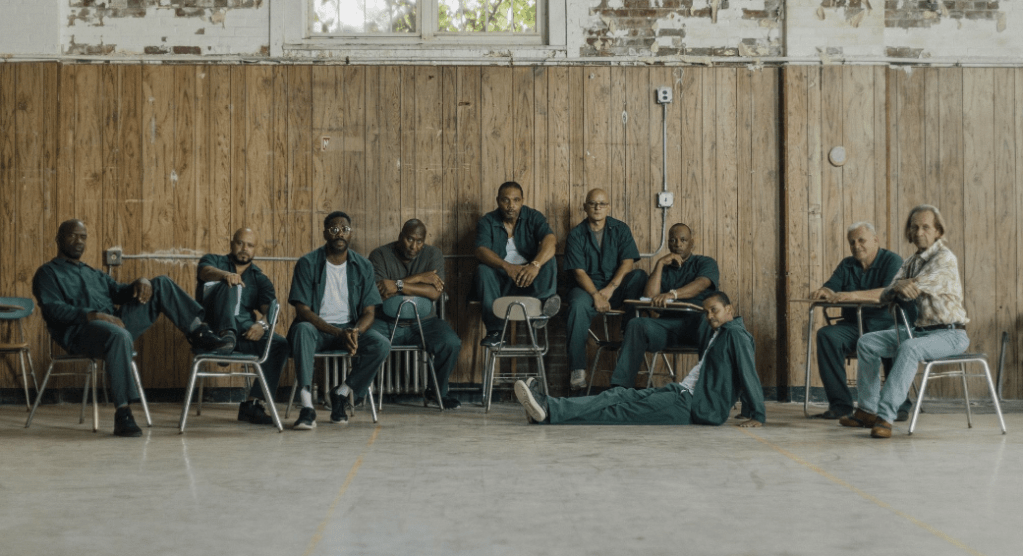
Based on the true story of a man imprisoned at Sing Sing for a crime he didn’t commit. When joined by a wary outsider, he finds purpose staging an original comedy with a theater group of other incarcerated men.
As one of the most incarcerated countries in the world, the United States largely operates under a system of punitive justice—where those sentenced to prison are often seen as irredeemable, incapable of rehabilitation. Sing Sing challenges this notion by spotlighting a real-life arts program at the New York penitentiary of the same name, where inmates enroll in creative and educational initiatives to foster personal growth. At the heart of the film is a theater group that stages performances for the local community.
But Sing Sing is more than just a story about prison theater. It delves into criminal injustice, with John Whitfield (Colman Domingo) serving time for a crime he did not commit. As he navigates the realities of incarceration, his faith in humanity is tested through personal losses and systemic setbacks. The film serves as a reminder to the transformative power of art, showing how creative expression can provide healing, purpose, and resilience in the face of adversity.
There’s thematic DNA here from The Shawshank Redemption and Viktor Frankl’s Man’s Search for Meaning—not in directly comparing Whitfield’s suffering to Frankl’s unimaginable horrors, but in their shared exploration of finding meaning in hardship.
The performances are among the year’s best. Colman Domingo and Clarence Maclin shine in their respective roles—but when you learn that most of the cast are former inmates who actually went through this program? Oof.
8. Challengers

Tashi, a tennis player turned coach, has transformed her husband from a mediocre player into a world-famous grand slam champion. To jolt him out of his recent losing streak, she makes him play a challenger event — close to the lowest level of tournament on the pro tour. Tensions soon run high when he finds himself standing across the net from the once-promising, now burnt-out Patrick, his former best friend and Tashi’s former boyfriend.
As someone whose only tennis experience is in the game of Mario Tennis, I really have no connection to the sport—which is why I was surprised that I loved Luca Guadagnino’s film as much as I did.
Challengers is far more than just a tennis love triangle—it’s a crafted character study filled with rivalry, obsession, and shifting power dynamics. Luca Guadagnino uses the structure of a high-stakes match to explore the tangled relationships between Tashi (Zendaya), Art (Mike Faist), and Patrick (Josh O’Connor), making for one of the most compelling films of the year. With electric performances—especially from Zendaya—and a sharp, tension-filled script, Challengers keeps you constantly switching allegiances, much like a tennis match itself. Add in a pulsating Trent Reznor score, and this is easily Guadagnino’s best film since Call Me By Your Name.
7. The Seed of the Sacred Fig

Iman, an investigating judge in the Revolutionary Court in Tehran, grapples with paranoia as nationwide political protests erupt following the death of a young woman. His gun mysteriously disappears, causing him to distrust his wife and daughters.
You can’t discuss The Seed of the Sacred Fig without acknowledging the real-world fallout from its creation. Mohammad Rasoulof had to make the film in secrecy to avoid censorship and punishment from the Iranian government. After completing the film, he had to flee the country to release it. Unfortunately, not all the actors involved were able to do the same and now face travel bans preventing them from leaving Iran.
Rasoulof’s film is an uncompromising critique of the Iranian regime in the wake of the 2022-2023 protests, during which the government killed 551 protestors.
Regardless of how you feel about Iran, it is still filled with people no different from you or me. One of the central conflicts in the movie pits the parents’ view of their country against their children’s differing perspective—something that may hit home for many.
Beyond the real-life circumstances surrounding the film, The Seed of the Sacred Fig still stands as a tense political thriller with high stakes. The acting across the board is phenomenal. While the middle section of the movie may feel a bit slow for some, the ending ramps up the intensity. It’s reminiscent to one of my favorite movies from earlier this century, The Lives of Others (2006), a German film that equally builds tension in a very slow way.
Perhaps one of the greatest gifts this film offers is showing me just how little I know about the world—no matter how much I think I know otherwise. On the surface, there is much to soak in: the harsh treatment of citizens by their government, the moral divide between the youth and older generations, and the oppressive, draconian control and abuse exerted by a father on his family.
Yet, beneath that surface, there’s political, social, and cultural subtext about Iran that makes the film even deeper. I’m just a guy in the middle of America who knows what I know—and knows what I don’t.
The Seed of the Sacred Fig just makes me want to understand more.
6. Small Things Like These

In 1985 coal merchant Bill Furlong uncovers disturbing secrets in a small Irish town that’s controlled by the Roman Catholic Church.
Small Things Like These is bleak, melancholic, and deeply reflective. While many Irish films focus on The Troubles, the Magdalene Laundries are often overlooked—I certainly hadn’t heard of them before. And what an eye-opener this film was.
In a devoutly religious society, there’s an eerie silence surrounding what happens behind closed doors. Everyone knows, but fear keeps them from speaking out. We experience this through Bill Furlong (Cillian Murphy), a weary coal merchant who, by chance, gets a harrowing glimpse inside the local Magdalene Laundry—where so-called ‘impure’ women are sent to be rehabilitated.
Cillian Murphy delivers yet another stellar performance. I loved the haunting soundtrack and the way flashbacks seamlessly intertwine with the present. Like coal, this film is a slow burn—it makes its 98 minutes feel weighty—but it struck a deep chord with me. You don’t need to know Irish history to feel the gravity of its moral dilemma.
At what point can you no longer look the other way?
5. Red Rooms
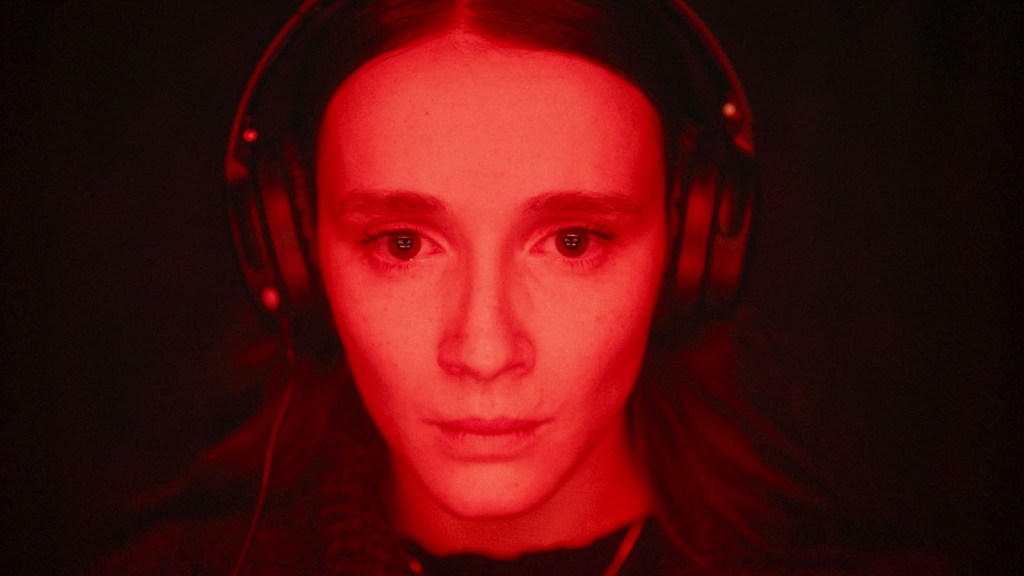
Kelly-Anne is obsessed with the high-profile case of a serial killer, and reality blurs with her morbid fantasies. She goes down a dark path to get the missing video of the murder of a young girl, to whom Kelly-Anne bears a disturbing resemblance.
Kelly-Anne spirals down a dark web rabbit hole in search of footage showing a serial killer’s murder of a young girl. Some scenes are difficult to endure, as we hear the victims being tortured off-camera. Ready to schedule family movie night yet?
So why am I recommending this? If you can stomach the premise and its unsettling subject matter, Red Rooms delivers one of the most gripping thrillers in recent memory. Kelly-Anne is one of the most compelling character studies of the year, making for a film that begs to be discussed. The moral boundaries of right and wrong blur as Red Rooms delves into obsession, voyeurism, justice, and complicity.
The less you know going in, the better. Just know that this film lingered in my mind for weeks after watching.
4. The Substance

Elisabeth Sparkle, renowned for an aerobics show, faces a devastating blow on her 50th birthday as her boss fires her. Amid her distress, a laboratory offers her a substance which promises to transform her into an enhanced version of herself.
If Poor Things was the bold risk of 2023, then The Substance claims that title for 2024. But aside from its heavy use of nudity, the comparisons end there. The Substance doesn’t push the moral boundaries like Yorgos Lanthimos did with Poor Things, but it certainly surpasses it in terms of sensory shock.
Enter The Substance at your own risk. It’s sexual, violent, and sadistic. Body horror isn’t something I typically seek out—The Thing and The Fly have satisfied me for a lifetime—but my curiosity got the better of me. While I wasn’t as repulsed as I was by those two films, I wouldn’t recommend this one off the cuff to most people. Definitely not a family movie night choice.
Still, beneath the shock value, the film grapples with deep themes around the absurd beauty standards society imposes on us.
Demi Moore would probably be my pick for Best Actress if I had a vote. She masterfully portrays the middle-age crisis and yearning for youth. While the film’s shock factor is ever-present, it’s the quieter moments in between where Moore truly impressed me.
If you can stomach it, The Substance might just become one of the most memorable films of the year. Whether that’s a good or bad thing is something you’ll have to decide for yourself.
3. Anora
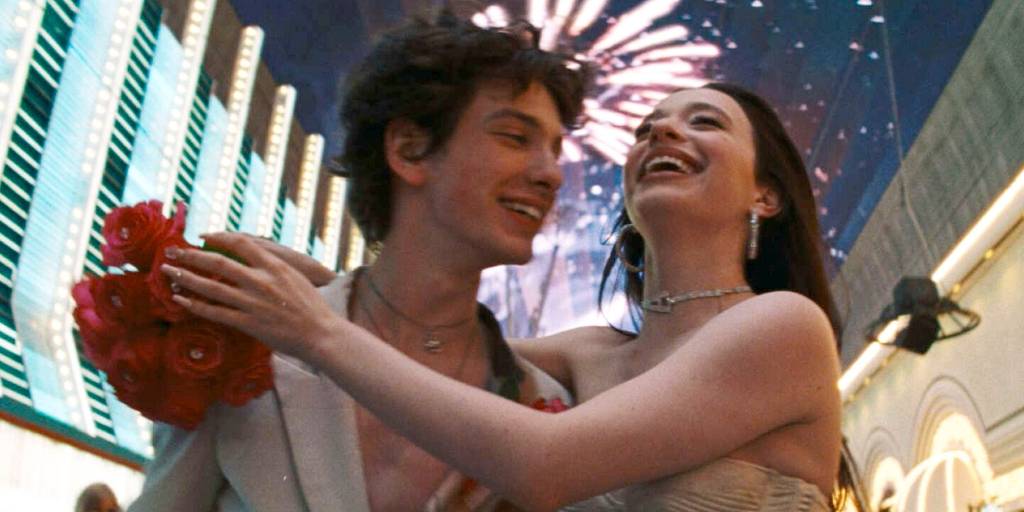
Anora, a young woman from Brooklyn, gets her chance at a Cinderella story when she meets and marries the son of an oligarch. Once the news reaches Russia, her fairytale is threatened as the parents set out for New York to get the marriage annulled.
Winner of the Palme d’Or at this year’s Cannes Film Festival, Anora has generated a lot of hype—and for good reason. It’s rare when the buzz is truly deserved, but this film earned it. I don’t think I’ve connected with a movie this much in a long time; I was hooked within the first two minutes.
Anora is comically absurd, unapologetically sexual, and soul-crushing. Mikey Madison plays Anora, a stripper who meets Vanya, the son of a Russian oligarch. Their electric relationship propels Anora from the gritty underbelly of Brooklyn to a world of elite luxury few ever experience. When they spontaneously marry in Las Vegas, Vanya’s parents catch wind of it—and the consequences are swift and severe.
Anora is far from perfect. Some friends of mine were let down by the film’s middle section, and I get it—it’s definitely the weakest part. But I’m willing to overlook its flaws because I loved the opening so much. And the ending? It stuck with me for weeks after. This was one of the best theater experiences I’ve had this year. People laughed at Vanya’s immaturity, Toros’ sheer panic, and Igor’s awkward stoicism—but when that ending hit? Dead silence.
Sean Baker isn’t afraid to tackle taboo subjects in American society. Anora offers an honest look into the world of sex work and the crushing realities of the American dream.
The film is unafraid to throw punches, seamlessly shifting from romantic comedy to black comedy to family drama to human tragedy. Yet it never feels inauthentic. The witty dialogue at times reminds me of the absurdity in Dr. Strangelove, while the humor echoes Barry. The intense pacing brings to mind the Safdie Brothers. What we’re left with is an incredibly unique film from Sean Baker.
2. The Brutalist

Escaping postwar Europe, a visionary architect comes to America to rebuild his life, his career, and his marriage. On his own in a strange new country, he settles in Pennsylvania, where a wealthy and prominent industrialist recognizes his talent.
It sounds a little cliche hearing the word “epic” used to describe The Brutalist, but I’m having a hard time conjuring up a word that can invoke the size and scope of this movie. Not only is it gargantuan in it’s runtime at three hours and thirty-five minutes, but Director Brady Corbet’s implementation of VistaVision showcases a grandeur of America that is almost reminiscent of David Lean’s works such as Lawrence of Arabia or Dr. Zhivago. It’s honestly hard to remember a time when a film like this would even have gotten made.
The movie is almost overwhelming in it’s scope. The more I find myself wanting to write about, the more I realize that it feels like I’m only scratching the surface.
The Brutalist is an aptly named look into the American immigrant experience. It’s filled with optimism and crushing in it’s pessimism. It questions the idea of the American Dream and exactly who it benefits. While the American Dream encompasses the idea of hard work, class mobility, and perseverance—capitalism in the United States plays a major role in it. Capitalism’s dark underbelly is on full display: exploitation, power imbalances, and wealth inequality.
But The Brutalist isn’t just a critique of the American Dream. It delves into the tension between artistic freedom and commercialization, love and loyalty, moral integrity, and the human cost of staying true to one’s values.
Narratively speaking, despite its lengthy runtime, I was never once bored—the film’s pacing is impeccable. I was fortunate that my theater included an intermission, but for those watching at home, the ability to pause might make it more manageable. That said, if your experience is anything like mine, you’ll be so entranced that you’ll finish it in one sitting. I also don’t have pets or kids, so maybe take my input with a grain of salt.
There are two things I need to address: that one scene and the epilogue. I won’t spoil the former (I’m a tease, I know), but the criticism surrounding it is valid. In a film packed with complex themes, it felt needlessly on the nose. If it had been cut entirely, the film’s message wouldn’t have suffered in the slightest. As for the epilogue, it initially struck me as an odd conclusion, but I have to admit—it became the part I discussed the most afterward with my wife and friends.
And I can’t end this section without talking about Adrien Brody and Guy Pearce. The movie doesn’t work without either one of them. Guy Pearce gives the performance of his career as the charismatic and hypnotic Harrison Lee Van Buren. Adrien Brody equally nails it as the hard headed and persistant Lazlo Toth.
This movie will be an entire post of it’s own in the future.
1. Nickel Boys
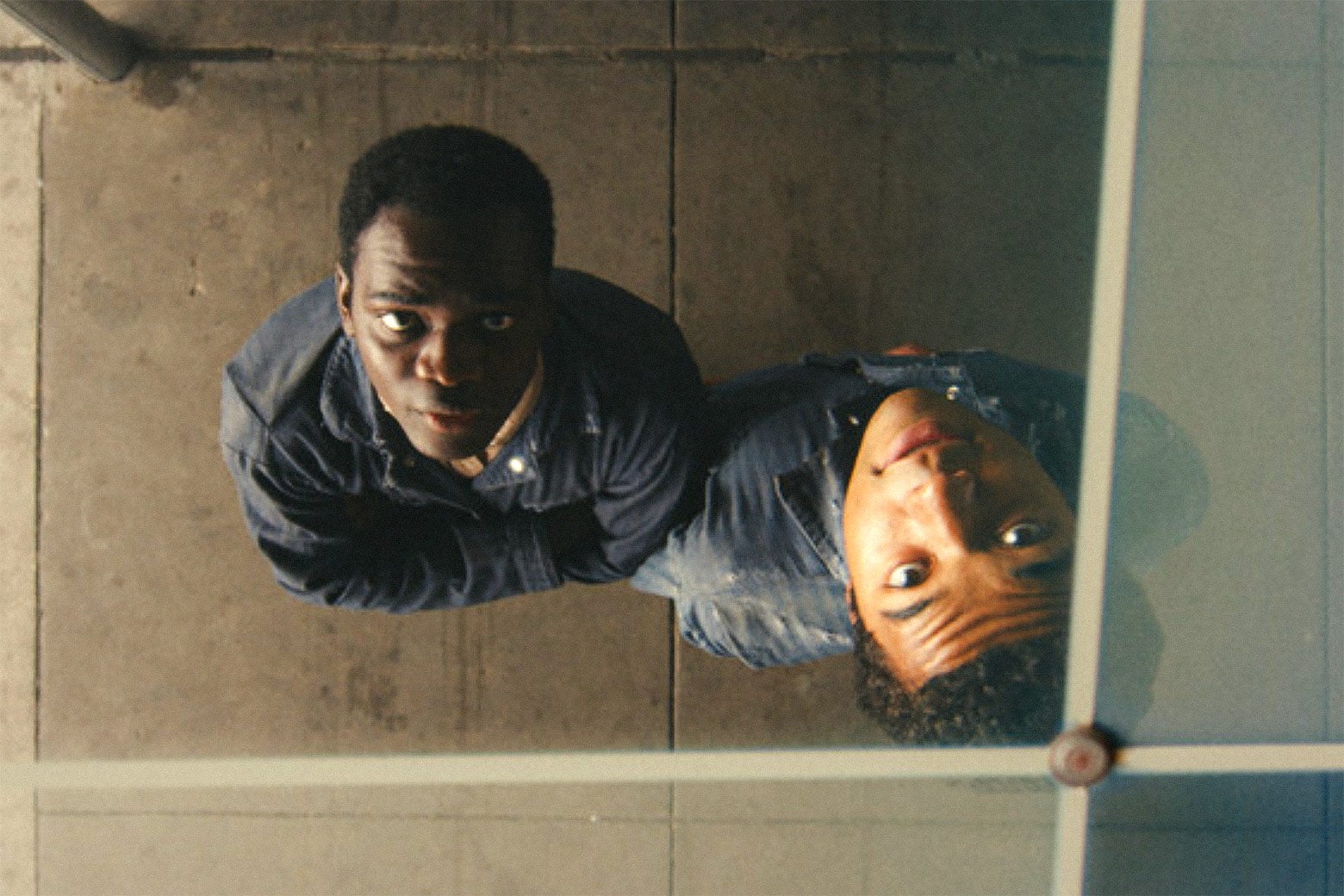
Elwood Curtis’ college dreams are shattered when he’s sentenced to Nickel Academy, a brutal reformatory in the Jim Crow South. Clinging to his optimistic worldview, Elwood strikes up a friendship with Turner, a fellow Black teen who dispenses fundamental tips for survival.
When I was in film school at OU, I watched and analyzed a lot of different movies. What stood out to me was, despite this varied art form, there is a homogenous aspect to it all. Camera shots follow rules, as do edits and story beats. You may not pick up on it consciously, but when studied closely it made it easier to pick out how many similar elements all movies share. Story has, and always will, be the ultimate trump card. But every now and then, a film takes those rules and bends them—creating something fresh, bold, and unforgettable. Looking back at some of my favorite movies of their respective years recently, there are a number that qualify. Birdman (2014) used an unbroken one-shot illusion to immerse the audience in its characters’ unraveling psyches. The Tree of Life (2011) was Terrence Malick’s poetic, nonlinear meditation on existence. Everything Everywhere All at Once (2022) played it safer in a technical sense, but its sheer absurdity and narrative risk-taking made it stand out.
There’s only one movie this year that hits all of those marks for me: Nickel Boys.
While Nickel Boys is a work of fiction, it’s based on the real Dozier School for Boys in Florida–an institution that over it’s 111 year history, abused, beat, raped, tortured and murdered students. The school closed in 2011 after two separate investigations. 2011.
From the moment the film begins, you notice its distinct style. The 4:3 aspect ratio recalls the boxy television broadcasts of the 1960s—the same televisions that brought Americans images of civil rights protests and racial violence. But more than just a period-accurate aesthetic, the film employs an intimate first-person perspective, alternating between Elwood and Turner. This decision makes the experience claustrophobic, immersive, and emotionally devastating. At first, I wasn’t sure if I’d like it for the entire runtime. By the end, I couldn’t imagine it being shot any other way.
The 1960’s was a turbulent period of American History, with the Civil Rights move at its peak. It’s a dark contrast to the Space Race that was simultaneously happening. Nickel Boys weaves these two polar opposites together, creating a stark juxtaposition: while we sent people 330,000 feet into the sky in pursuit of progress, young men were being buried six feet underground in the name of discipline and hatred. As the world looked upward for inspiration, society turned a blind eye to the atrocities these schools were committing.
RaMell Ross is a director to watch. The auteur theory suggests that a filmmaker’s personal vision should be unmistakable, and while it may be early to call Ross an auteur, his style is already distinct. One look at his first film, Hale County This Morning, This Evening, and you see his gift for blending seamlessly into his environment—capturing life as it is rather than as a manufactured narrative. That instinct translates powerfully into Nickel Boys, where every choice feels deliberate yet natural.
It’s easily my movie of the year, and I certainly hope it impacts you in the way it did for me.




 hunter albert
Leave a reply to ralbert45813acfea Cancel reply